Contact Us

Our Story — Verizon Business: From Verizon Wireless Heritage to a Unified Commercial Brand

Verizon Business is the commercial arm of Verizon Communications Inc. (NYSE: VZ), carrying forward the heritage of Verizon Wireless Business, Verizon Enterprise Solutions and Verizon Fios Business into one unified portfolio. This page traces the corporate timeline from the 1997 Bell Atlantic / NYNEX merger through the 2020 unification that produced Verizon Business as you know it today.

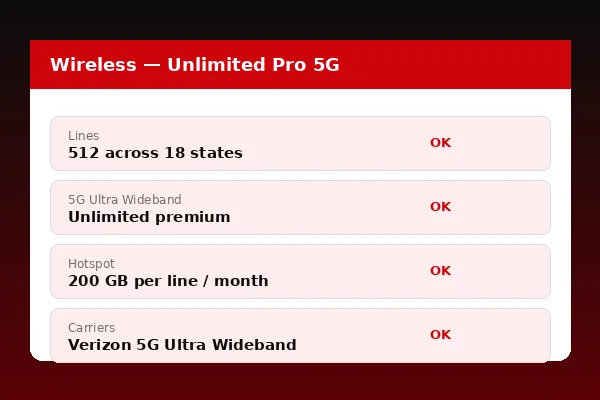
The Verizon Business customer book now spans 1.5 million+ US commercial accounts, supported by 230,000+ fiber route miles and 99% US population wireless coverage. The Verizon Business global IP backbone reaches 150+ countries — owned infrastructure rather than resale agreements.

The Verizon Business Corporate Timeline

Every milestone below shaped the modern Verizon Business portfolio. The thread that runs through it: consolidation — each merger and acquisition rolled another capability into what is now the unified Verizon Business commercial platform.

1997 — Bell Atlantic & NYNEX Merger

The foundation of modern Verizon Business begins with the 1997 merger of Bell Atlantic and NYNEX, creating the largest US telephone company at the time with operations stretching from Maine to Virginia. The combined entity served both consumer and business customers across the US Northeast corridor and inherited extensive copper and early fibre infrastructure from both predecessor companies.

Regulatory framework for the merger was set by the Federal Communications Commission under the Telecommunications Act of 1996. This is the earliest corporate ancestor that directly feeds into today’s Verizon Business infrastructure.
Verizon Business corporate timeline showing Bell Atlantic and NYNEX merger creating the foundation of modern US commercial telecommunications
Verizon Communications formation in 2000 creating the parent company behind Verizon Business commercial operations

2000 — Verizon Communications Formed & Verizon Wireless Joint Venture

On June 30, 2000 Bell Atlantic completed the acquisition of GTE and rebranded as Verizon Communications Inc. The same year, Verizon and Vodafone Group created Verizon Wireless as a joint venture (55% Verizon, 45% Vodafone) to run the mobile business. This is the birth of the Verizon Wireless brand that seeded everything you now see inside Verizon Business.

Verizon Wireless Business, the commercial wing of the joint venture, handled fleet wireless, enterprise mobility and public sector contracts for 20 years before folding into the modern Verizon Business umbrella.

2006 — MCI Acquisition

Verizon acquired MCI Communications in January 2006 for approximately USD 7.6 billion, gaining the former WorldCom long-distance and data backbone. This acquisition brought enterprise voice, global IP transit, international data services and the UUNET internet backbone into Verizon. Rebranded as Verizon Business in 2006 (the first use of the Verizon Business name), it became the root of what we call the modern FCC-regulated Verizon Business global enterprise services line.

Today’s Verizon Global IP network that reaches 150+ countries traces its physical backbone to the MCI / UUNET acquisition rolled into Verizon Business.

Verizon Business global IP network heritage from the 2006 MCI acquisition feeding modern international connectivity

Verizon Business Heritage in One Block

A compressed timeline for researchers, buyers and industry analysts mapping the Verizon Business provenance.

Executive Findings

  • Verizon Business is a wholly owned commercial division of Verizon Communications Inc. (NYSE: VZ) formed by unifying Verizon Wireless Business, Verizon Enterprise Solutions and Verizon Fios Business in 2020.
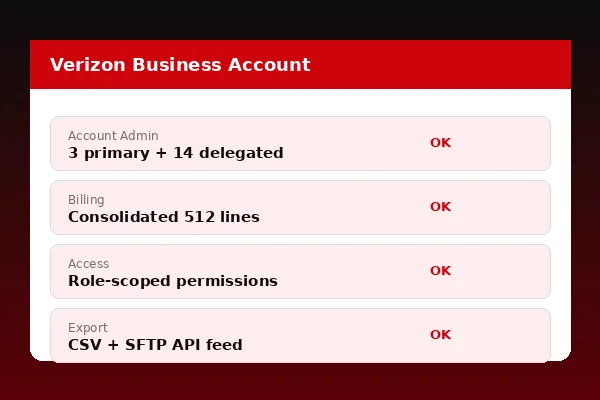
  • Legacy Verizon Wireless Business accounts (opened 2000–2019) migrated into the modern Verizon Business portal with zero account number, device line or billing continuity changes.
  • Verizon bought the remaining 45% of Verizon Wireless from Vodafone in 2014 for USD 130 billion — one of the largest corporate transactions in US history.
  • XO Communications acquisition (2017) added fibre and Ethernet reach to Verizon Business, raising fibre route miles to 230,000+.
  • Verizon Business serves 1.5M+ US commercial accounts, 99% US population wireless coverage and 150+ country global IP reach.

2014 — Verizon Wireless Buyout

Verizon acquired Vodafone’s 45% stake in Verizon Wireless for USD 130 billion, making Verizon Wireless a wholly owned subsidiary. Without this buyout the modern unified Verizon Business brand would have required three-way partner approval.

2017 — XO Communications & Yahoo

Verizon acquired XO Communications (USD 1.8B) adding fibre to Verizon Business, and Yahoo’s operating business (USD 4.5B) which combined with AOL became the Oath / Verizon Media division — divested in 2021. The fibre stays; the media bet did not.

2020 — Verizon Business Unification

The reorganisation folded Verizon Wireless Business, Verizon Enterprise Solutions and Verizon Fios Business into a single Verizon Business brand. This is the brand you interact with today across wireless, fibre, 5G, voice, SD-WAN and IoT.

Verizon Communications is headquartered at 1095 Avenue of the Americas, New York, NY. The Verizon Business operational hub sits at 1 Verizon Way, Basking Ridge, NJ — the campus every enterprise account team and most senior engineering staff report into. Additional Verizon Business hubs exist in Ashburn VA (data centre and network operations), Irving TX (operations and billing) and numerous regional sales offices. Verizon Business trades publicly through the parent Verizon Communications stock (NYSE: VZ).

Verizon Business Milestone Table

Six milestones that shape what Verizon Business delivers to commercial customers in 2026.

YearEventImpact on Verizon Business
1997Bell Atlantic & NYNEX mergerCreated US Northeast telecom footprint that becomes the copper/fibre backbone of Verizon Business today
2000Verizon Communications formed; Verizon Wireless JV with VodafoneBirth of the Verizon brand; Verizon Wireless Business emerges as the commercial mobile carrier that precedes Verizon Business
2006MCI acquisitionAdded enterprise voice, global IP and UUNET backbone; first use of the Verizon Business name in branding
2014Vodafone bought out of Verizon Wireless (USD 130B)Full ownership of Verizon Wireless unlocked the later Verizon Business unification without partner approval
2017XO Communications acquisition; Yahoo operating businessFibre and Ethernet reach doubled; Verizon Business moves to 230K+ fibre route miles
2020Verizon Business unificationVerizon Wireless Business, Verizon Enterprise Solutions and Verizon Fios Business merge into one Verizon Business brand and portal

Verizon Business at a Scale

The numbers that ground the Verizon Business heritage story in operational fact.

1.5M+US Verizon Business Commercial Accounts
230K+US Fibre Route Miles
99%US Population Wireless Coverage
150+Countries on Global IP Backbone

Frequently Asked Questions Our Story — Verizon Business

When was Verizon Business founded?
Verizon Communications Inc., the parent company behind Verizon Business, was founded on June 30, 2000 through the merger of Bell Atlantic and GTE. The commercial operations were unified under the Verizon Business brand in 2020, consolidating Verizon Wireless Business, Verizon Enterprise Solutions and Verizon Fios Business. The Verizon Business brand therefore inherits a corporate lineage that stretches back to Bell Atlantic and NYNEX, which merged in 1997.
What company owns Verizon Business?
Verizon Business is a wholly owned division of Verizon Communications Inc. (NYSE: VZ), headquartered at 1095 Avenue of the Americas, New York, NY. Verizon Business operates globally out of 1 Verizon Way, Basking Ridge, NJ. There are no external shareholders of Verizon Business separate from Verizon Communications — the Verizon Business commercial operation rolls up under the Verizon Communications consumer reporting segment and the Verizon Business Group reporting segment.
What happened to the Verizon Wireless brand?
Verizon Wireless operated as the consumer and commercial mobile carrier brand from 2000 to 2019. In 2020 Verizon restructured its go-to-market into two umbrella brands: Verizon Consumer and Verizon Business. The commercial side of Verizon Wireless folded into Verizon Wireless Business continuity inside Verizon Business, while the consumer side simply became Verizon. Legacy Verizon Wireless Business accounts migrated into the modern Verizon Business portal without account number, device line or billing continuity changes.
Is BlueJeans still part of Verizon Business?
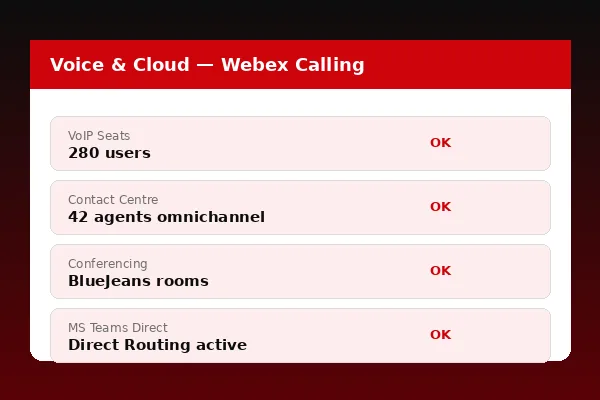
Verizon acquired BlueJeans Network in May 2020 and shut down the service in 2024. Verizon Business customers who relied on BlueJeans video conferencing migrated to Webex Calling, Microsoft Teams Direct Routing or Verizon Business Conferencing hosted by alternate partners. The BlueJeans product line is retired, but conferencing remains a core offering inside the Verizon Business unified communications catalogue.
Does Verizon Business serve the public sector?
Yes. Verizon Business Public Sector serves federal, state, local and education customers under separate contract vehicles including GSA Schedule 70, EIS, NASPO ValuePoint and individual state master agreements. Verizon Frontline provides a dedicated first-responder network slice. Every Verizon Business Public Sector account is supported by a dedicated public sector account team and complies with NIST Cybersecurity Framework, FedRAMP, CJIS, StateRAMP and agency-specific security controls.

Commercial Telecom Portal — Topic Cluster